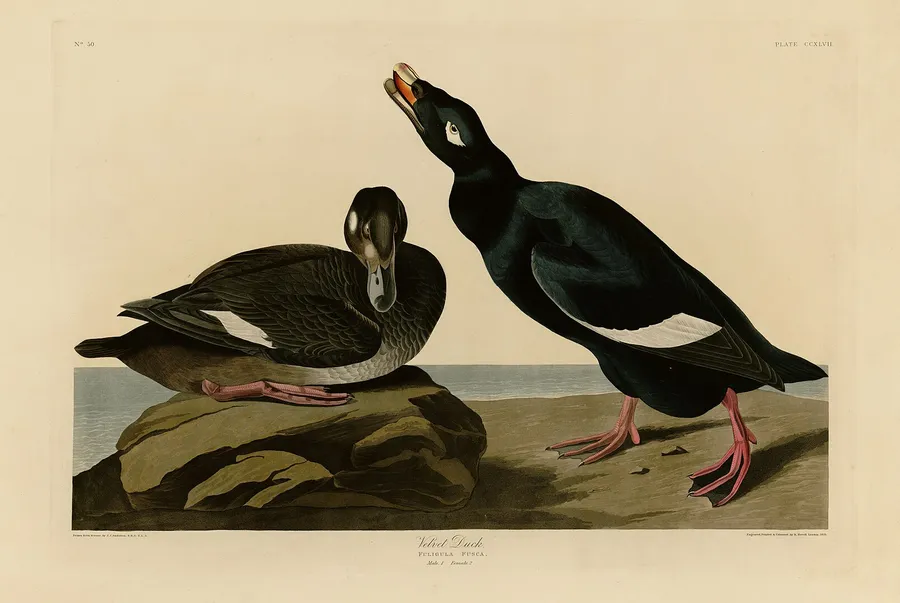
White-winged Scoter
“Harlequin Ducks (Two Lights and Fort Williams, Common Eiders, at least one King Eider (Dyer Point), Black and White-winged Scoters (Crescent Beach), Pintails (Ferry Beach), Red-breasted Mergansers, Red-necked Grebes, and numerous Common Loons.”
Through the year
Columns that mention it, by the month they were published.
Year by year
Columns that mention it each year.
In his words
All 7 passages, oldest first.
Harlequin Ducks (Two Lights and Fort Williams, Common Eiders, at least one King Eider (Dyer Point), Black and White-winged Scoters (Crescent Beach), Pintails (Ferry Beach), Red-breasted Mergansers, Red-necked Grebes, and numerous Common Loons.
Speaking of ducks, fair numbers of Black and White-winged Scoters, Long-tailed, aka “Oldsquaw’s”, Common Loons and Eiders can still be seen without too much effort off Crescent Beach and rocky bluffs along Fort Williams State Park.
Other notables include: Surf and White-winged Scoters have arrived just offshore, a Yellow-bellied Sapsucker, two Northern Parula’s and a female Nashville Warbler playing hide-and-go-seek, and one of my most favorite adaptable dwellers of our forestlands ,a single chattering Carolina wren.
Other mentionables, Surf and White winged Scoter (ducks) have arrived for the winter already and are visible just offshore from Fort Williams.
Other noteworthy mentioning’s at these two locations include, Buffleheads, Surf Scoters, White-winged Scoters, Horned Grebes Long-tailed Ducks, Great Cormorants, and the fantastically adorned Harlequin duck – seemingly at home amid the tumult of the crashing seas.
As for new arrivals, on November 7 from Trundy Point’s undeveloped rocky headland I noted White-winged Scoters, Red-breasted Mergansers, Long-tailed Ducks, a single Black Guillemot and a lone Razorbill.
Additionally, on February 10 from Two Lights State Park I noted eight Long-tailed Ducks, several dozen Common Eiders and White-winged Scoters and a single Black Guillemot.