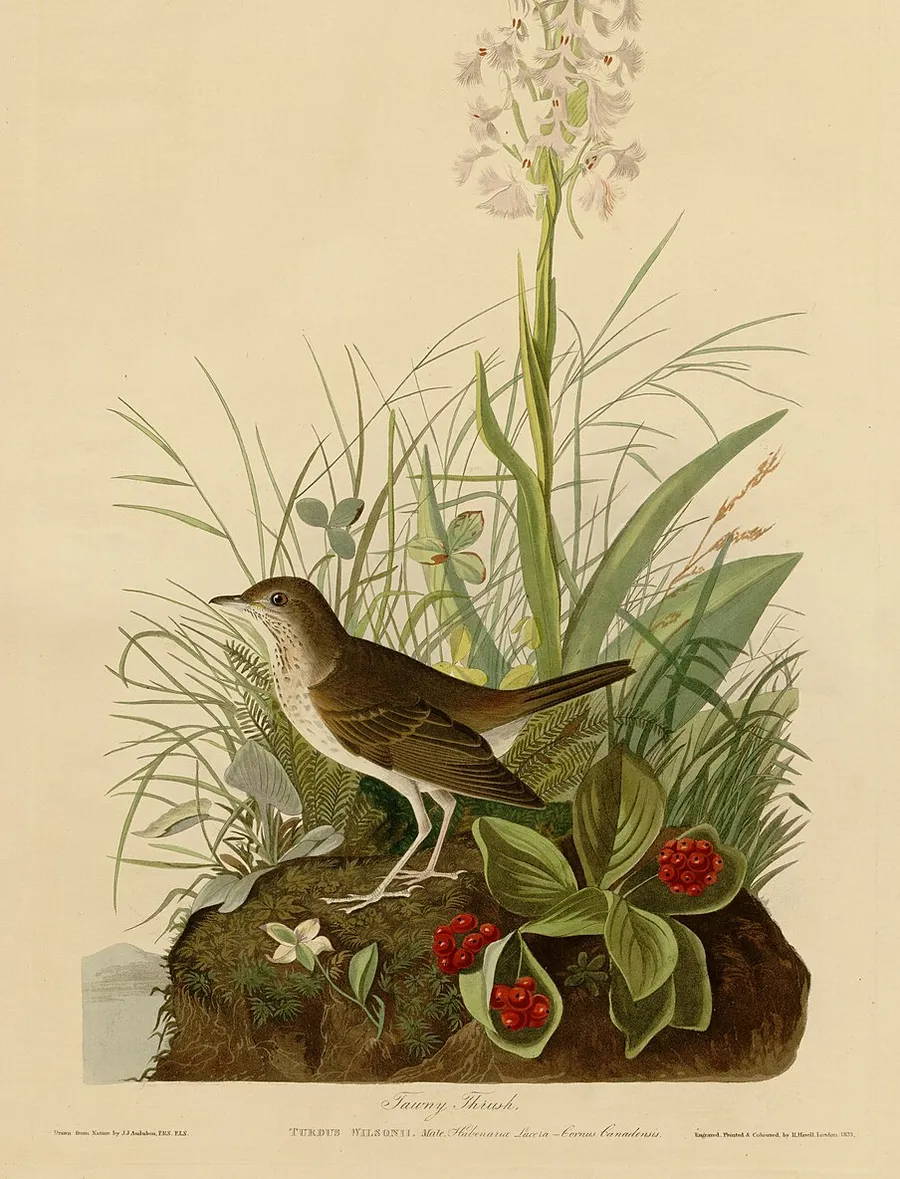
Veery
“The following day I was treated to a pre dusk chorus of Veerys, Hermit Thrushes, a Winter Wren, Black-throated Green Warblers and Ovenbirds.”
Through the year
Columns that mention it, by the month they were published.
Year by year
Columns that mention it each year.
In his words
Ten of the 21 passages, oldest first.
Thrushes, primarily the Hermit but also the Wood and close cousin Veery are passing through en route to their breeding grounds.
I also heard Wood Thrushes, Veery’s and Hermit Thrushes calling consistently across the Greenbelt system.
The breezy ethereal song of the Veery can be still be heard from dawn to dusk.
My wife, son and I were also treated to our first of the year Veery.
I have also seen and heard many Veery’s and Wood Thrushes calling consistently right now across the green belt system and Robinson Woods II & I. Thrushes are often a tricky bird to identify, especially when you consider the other Thrushes passing through our forests right now, including the Swainson’s Thrush…
Across the more interior intact sections of Cape Elizabeth, Black-throated Green Warblers and Ovenbirds are making themselves known as are Veery’s. Of the thrush family, the Veery’s breezy spiraling song is enchanting as it echos across the understory.
The breezy ethereal song of the Veery can be still be heard from dawn to dusk, as can the Hermit Thrush’s wavering pitch and prominent overtones.
I have also seen and heard many Veery’s calling consistently right now across the Green belt system and Robinson Woods II & III.
Across the more interior intact sections of Cape Elizabeth, Black-throated Greens, Ovenbirds and Pine Warblers are still making themselves known as are Veerys.
Adding to the chorus at sundown are Common Yellowthroats and Yellow Warblers, American Redstarts, Veery’s, Great-crested Flycatchers, Eastern Wood-Peewees and Red-winged Blackbirds.
Show all 21 passages
The breezy ethereal call notes of the Veery continue to add to the chorus.
The following day I saw a Veery (thrush) and one of my favorites, a Red-breasted Nuthatch.
Other noteworthy mentionings include: on June 5 in Robinson Woods II – a raspy cry from a fledgling Barred Owl accompanied by the mechanical rattle of a Belted Kingfisher and three different singing thrushes, Hermit, Wood and Veery.
Within a half hour time span I also heard five different types of thrushes singing - Eastern Bluebird, Veery, Hermit Thrush, Wood Thrush and American Robin.
Stepping deeper into the forest, the pulsing call of the Ovenbird intertwines with the ethereal songs of the Hermit and Veery.
On first day of June within the dark forest interior of Robinson Woods I was treated to a dusk chorus of Veery’s, Hermit Thrushes, a Winter Wren, Black-throated Green Warblers, Ovenbirds, Redstarts and Northern Parulas.
Stepping deeper into the shadowy forest, the pulsing songs from Ovenbirds intertwine with the delicate notes of a Hermit Thrush and several Veeries.
I was also treated to the songs of Veery’s, Hermit Thrushes, Great-crested Flycatchers, Cedar Waxwings and a single and Wood Thrush and Least Flycatcher.
As I walked deeper into the woods the enchanting tunes of Veerys and Hermit Thrushes intermingled with the flamboyant outbursts of a Winter Wren.
The following day I was treated to a pre dusk chorus of Veerys, Hermit Thrushes, a Winter Wren, Black-throated Green Warblers and Ovenbirds.
And within just a half an hour, the woods along this stretch of road came alive with the voices of five different thrushes—Eastern Bluebird, Veery, Hermit Thrush, Wood Thrush and American Robin.