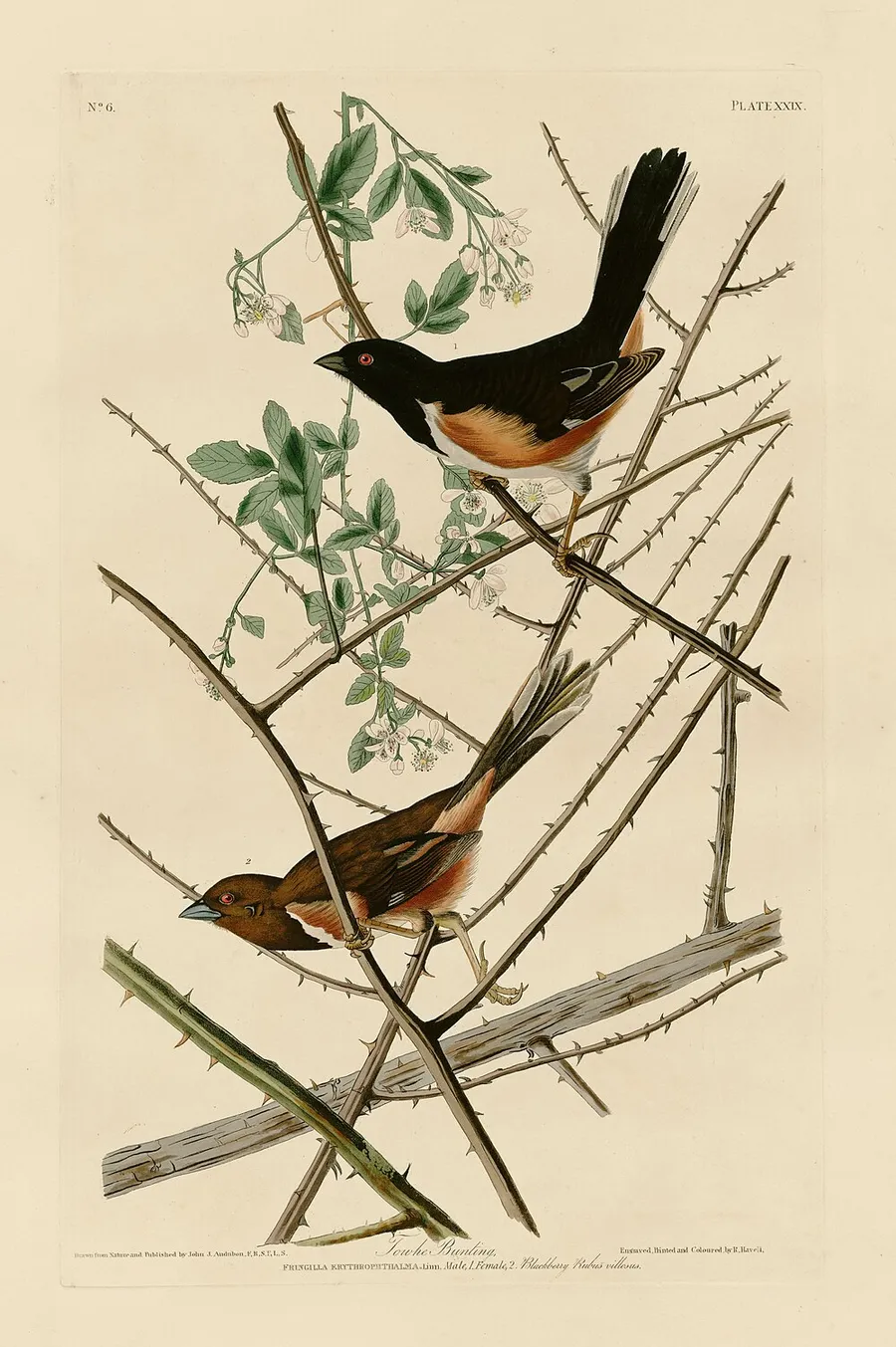
Eastern Towhee
“This list includes birds that can still be seen in Cape Elizabeth at certain times of year like the Evening Grosbeak, Bobolink, Golden-winged Warbler, Eastern Towhee and Yellow-billed Cuckoo.”
Through the year
Columns that mention it, by the month they were published.
Year by year
Columns that mention it each year.
In his words
Ten of the 24 passages, oldest first.
I had our first Eastern Towhee (male) at our feeders on the morning of April 23.
Eastern Towhees showed up right on time.
On July 8 a single Eastern Towhee was heard along the back of the Transfer site of the Gull Crest trails thick undergrowth.
At this time last year migrants like the Eastern Towhee and Black-throated Green warbler were already here, and in decent numbers.
On July 10 a single Eastern Towhee was heard along the back of the Transfer site of the Gull Crest trails thick undergrowth.
Lastly, on April 25 I heard the high-pitched, lisping call of an Eastern Towhee coming from the depths of Robinson Woods.
Late April brought Brown Thrashers, Eastern Towhees, House Wrens, Gray Catbirds and Rose-breasted Grosbeaks to backyards and bushy margins of abandoned hayfields and forest edges.
And deep within the tangles a male Eastern Towhee emerged and mounted to the top of a Larch tree to perform his metallic trill, drink-your-tea reminder for a porcupine snoozing in the late afternoon sun.
…and off course birds from outside their normal range, referred to as accidentals or vagrants may show up As for observations over the last two weeks, the delightful stretch of weather starting on the first of the month brought a solo southbound Magnolia Warbler and not one but four Eastern Towhees to our yard.
House Wrens, Eastern Towhees, Brown Thrashers and Rose-breasted Grosbeaks were sparsely reported.
Show all 24 passages
Another strikingly marked, ground nesting songbird in sharp decline is the Eastern Towhee.
Also, on the late afternoon of July 21 a single Eastern Towhee was singing along Charles Jordan Road and on July 24 just before dusk I heard the lush, flute like song of my first Wood Thrush of the year somewhere along the woodland fringes of Crescent Beach State Park.
Purple Finches can imitate songs from Barn Swallows, Goldfinches, Towhees and even Cowbirds.
Of note, I was pleasantly surprised by four separate Eastern Towhee’s singing along the fringes of the forests and fields.
I eagerly made my way outside and soon found a female Eastern Towhee.
Of note, a Least Flycatcher and Eastern Wood-Peewee were gleaning insects in an old crab apple tree as an Eastern Towhee called from within the surrounding thickets.
One of my favorite things about Blue-gray Gnatcatchers is their ability to produce a soft, pleasing warbling ditty, often including mimicked bits from repertoires of other birds including wood warblers, vireos, towhees and Blue Jays.
I also spotted my first Brown Thrasher of the season crossing Two Lights Road and later that afternoon spied five Ruby-crowned Kinglets, two Savannah Sparrow, a Hermit Thrush and a single Eastern Towhee along the splendid little Greenbelt Trail tucked along the western side of the Riverside Cemetery.
On October 5 I heard a southbound Eastern Towhee calling from the invasive tangles surrounding my yard.
This list includes birds that can still be seen in Cape Elizabeth at certain times of year like the Evening Grosbeak, Bobolink, Golden-winged Warbler, Eastern Towhee and Yellow-billed Cuckoo.
The following morning our backyard was carpeted with White-throated Sparrows along with an array of first of the year birds including a Northern Parula, two Gray Catbirds and a female Eastern Towhee.
Outside, a female Eastern Towhee leapt from the underbrush, perched atop a habitat pile, and delivered her rising two-part chewink call.
And deep within the tangles, a male Eastern Towhee emerged onto a dead birch to deliver his metallic trill—drink-your-tea—in the late afternoon sun.
Additionally, I encountered a secretive Eastern Towhee hidden within the tangled cover of CELT’s Viking II property.