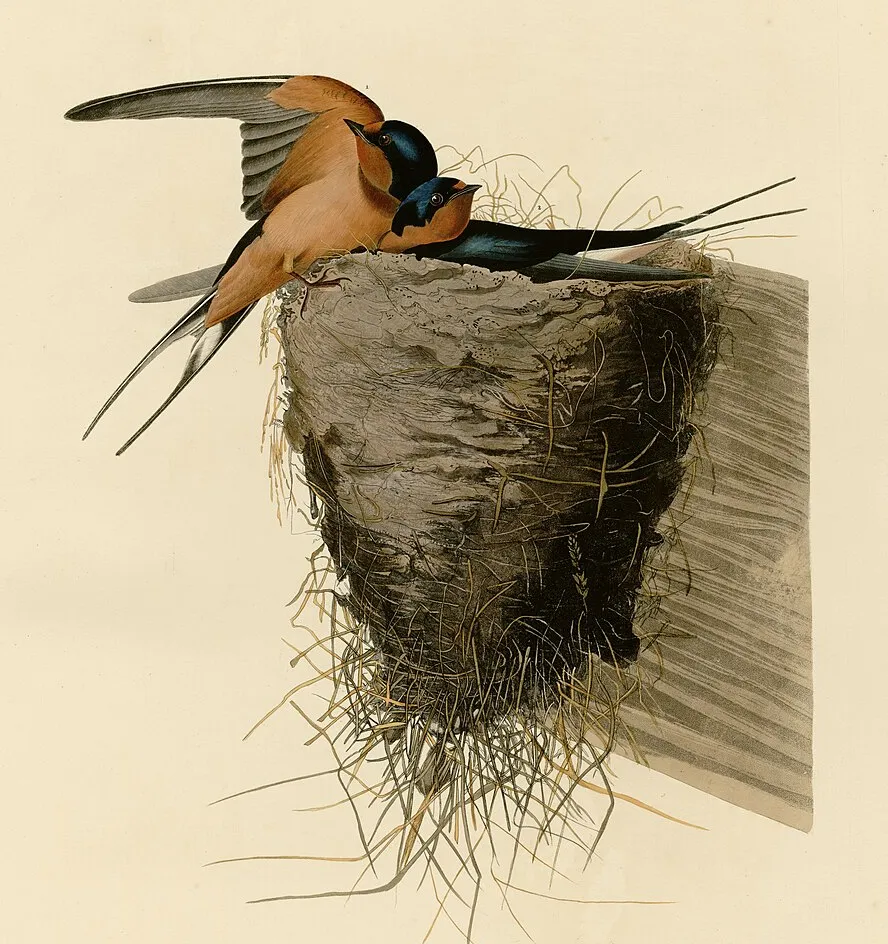
Barn Swallow
“By the first day in May last year Gray Catbirds had already arrived as had Blue-headed Vireos, Blue Gray Gnatcatchers, Rose-breasted Grosbeaks, Indigo Buntings and Barn Swallows.”
Through the year
Columns that mention it, by the month they were published.
Year by year
Columns that mention it each year.
In his words
All 10 passages, oldest first.
Barn swallows were a welcome sight, with their fluid wingbeats, dips and dives.
Chimney swifts, Tree Swallows and Barn Swallows dart gracefully over our meadows and farmyards.
On May 27 highlights included a much-welcomed male Indigo Bunting with its deep-sea blue coloring and a Rough-legged Swallow in the company of a dozen or more Barn Swallows.
Chimney Swifts, Tree Swallows and Barn Swallows dart gracefully over our meadows and farmyards.
On the afternoon of May 1 along Wells Road, a flock of twelve Glossy Ibis foraged the flooded fields with their sickle-shaped bills while a mixed flock of Tree Swallows and two Barn Swallows above on the telephone pole wires chirped and gurgled away.
Beyond the perimeter of the island Bayberry thickets give way to rolling lowland meadows where congregating Tree and Barn Swallows acrobatically foraged for flying insects.
By the first day in May last year Gray Catbirds had already arrived as had Blue-headed Vireos, Blue Gray Gnatcatchers, Rose-breasted Grosbeaks, Indigo Buntings and Barn Swallows.
And on July 2, my son and I came across an adult Willet with three fledglings crossing the Sawyer Road section of the Spurwink Marsh as dozens of Barn Swallows darted and dove above us.
On the morning of May 8 the first pair of male and female Rose-breasted Grosbeaks feasted together at our feeder while a Barn Swallow and two Chimney Swifts flew high overhead.
Barely larger than a Barn Swallow, Wilson’s Storm Petrels spend nearly their entire lives on the open ocean, feeding on plankton in cold, nutrient rich waters where deep currents upwell.